
THE RIGHT CHECKLIST DEPENDS ON WHAT YOU OWN AND WHERE YOU STORE IT.
Boating seasons do not end at the same time everywhere. Northern boaters may already be preparing for freezing nights, while owners in warmer climates could still have weeks of boating ahead.
A useful winterization plan should respond to the boat, its equipment, the expected conditions and the way the vessel will be stored.
Regardless of the type of boat you own, a thorough winterization plan should address the following fundamentals.
Different styles of boats have different layouts, equipment and places where water or moisture can accumulate. Winterization should account for the vessel’s design and every installed system.
Inspect the pontoon logs, motor pod and underdeck area. Empty and dry under-seat or center-toon storage, clean the upholstery and flooring, and drain any equipped livewells, baitwells and freshwater systems.
Pay particular attention to livewells, washdown systems, bilges, drains, fish boxes, freshwater systems and enclosed storage compartments. Remove salt, trapped water and anything that could retain moisture or contribute to corrosion.
Clean, dry and inspect the inflatable tubes, valves and seams, as well as the engine and hull. Use cleaning and protective products appropriate for the tube material. Whenever possible, store the boat in a clean, dry and protected location.
Prepare the boat’s comfort systems as carefully as its propulsion system. Drain equipped freshwater and sanitation systems, inspect the bilge and engine compartment, protect upholstery and carpeting, and remove anything that should not remain aboard during storage.
Winterization does not end when the engine and onboard systems have been prepared. The storage environment determines what needs to be inspected and monitored throughout the off-season.

Check the trailer, supports, security, drainage, ventilation and storage cover. Inspect the boat after major storms, periods of heavy rain or accumulating snow.
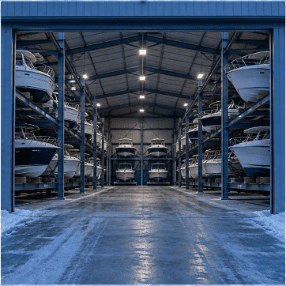
Confirm whether your agreement includes winterization services or storage only. Ask who is responsible for maintaining the batteries, inspecting the boat and responding if a problem develops.
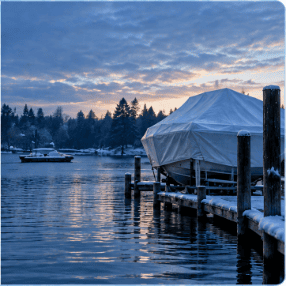
Continue monitoring the bilge pumps, batteries, shore-power connection, dock lines, fenders, weather conditions and below-waterline fittings. A boat that remains afloat remains an active responsibility, even when it is not being used regularly.
Cold weather, storms, power interruptions, battery problems and changing storage conditions can still affect a boat after it has been winterized. Preparation reduces risk, but continued awareness remains important throughout the off-season.
Boat Fix combines actionable telematics with around-the-clock monitoring and access to real people who can help boat owners stay informed about their vessels.
Awareness between visits can be especially valuable during long periods of storage, changing weather and extended time away from the boat.
Learn more at BoatFix.com or call 908-BOATFIX.
