
Reports across the U.S. highlight the role of movement alerts.
From a New Jersey marina to a South Carolina storage lot, documented thefts show why knowing where your boat is matters all year.
Boats are stolen in every season and from every kind of storage. Reports published over the past year describe vessels taken from a marina slip in New Jersey, a marina in Ohio, a residential property in Florida, a roadside and a residence in Louisiana, a marine business in Texas, a nonprofit’s boat in California, and a storage lot in South Carolina.
These cases do not prove a national rise in boat theft, and they do not show that every month carries the same risk. Read one at a time, though, they show how owners learned their boats were gone, how the boats were found when they were found, and where a movement alert fits into that sequence. First, a quick look at how Protect Mode works, since each case below is measured against it.
Protect Mode is an on/off security setting in the Boat Fix Pro app. When it is on, the Boat Fix device aboard watches for unauthorized movement, whether the boat is at a slip, on a mooring, on a trailer or in storage, and Boat Fix’s 24/7 Command & Control Center stands behind every alert.
It takes a few seconds on a phone, often while the owner is still walking up the dock:
Secure the boat at its slip, mooring or trailer as usual.
Open the Boat Fix Pro app.
Toggle Protect Mode on from the boat’s Status page.
That’s it. A short video in the Boat Fix help center walks through it. Before the next trip, the owner switches Protect Mode off.
A compact, IP67-rated device wired into the boat’s electrical system sends GPS location data to Boat Fix over its wireless connection. The same data feeds the live map, battery readings and trip history in the app.
Turning it on sets a geofence of about 100 yards around where the boat is secured.
If the boat moves outside the geofence without permission, the owner gets a phone call within seconds, not just a push notification that can go unseen, and the Boat Fix team makes its own outbound call.
If the owner didn’t authorize the movement, the boat’s live GPS position and track show where it is heading. Boat Fix states its Command & Control Center has direct lines to law enforcement.
The same service also covers battery voltage alerts, outreach when a high-water alarm stays active, location-based weather alerts and a 24/7 mechanical helpline.
Reported incidents at marinas, homes, businesses and storage lots. Images below are illustrative recreations, not incident photography.
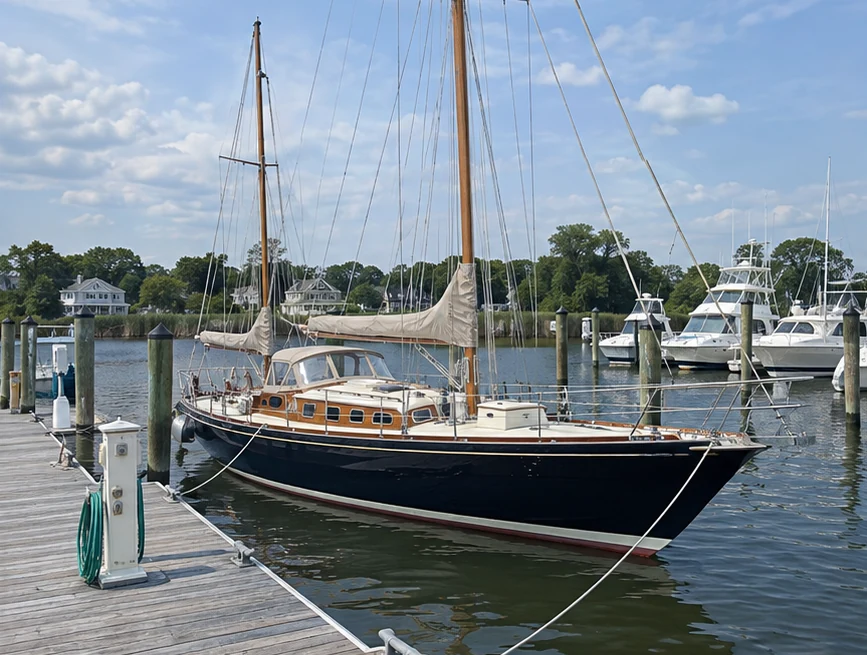
Late on August 22, 2026, a man was recorded undocking a 40-foot classic sailboat at a Jersey City marina and sailing away. The owner and his spouse arrived the next afternoon expecting to go sailing and found the slip empty. They contacted authorities and spread the word on social media and through a boat owners’ group.
On August 26, Newport’s harbormaster, who had been asked to watch for the boat, spotted a matching vessel in the city’s North Anchorage. The confrontation that followed left the suspect dead and a Newport officer wounded. The boat was recovered. The owner told reporters the suspect apparently disabled the boat’s GPS device shortly after boarding.
The owners learned of the theft the way most owners do, by arriving at the dock and finding it empty. By then the boat had most of a day’s head start, and it took four days and a harbormaster in another state to find it. Protect Mode is designed to replace that moment of discovery with a phone call.
With Protect Mode on, the geofence would have been centered on the slip. As the boat was undocked and taken out of the marina, it would cross the 100-yard line within minutes, triggering a call to the owner that night instead of an empty slip the next afternoon.
The limit in this case is the reported GPS tampering. Because the thief disabled onboard tracking so soon after boarding, we cannot say whether any alert would have gone out first. A knowledgeable thief may go after onboard electronics, which is one reason where a device is installed matters.
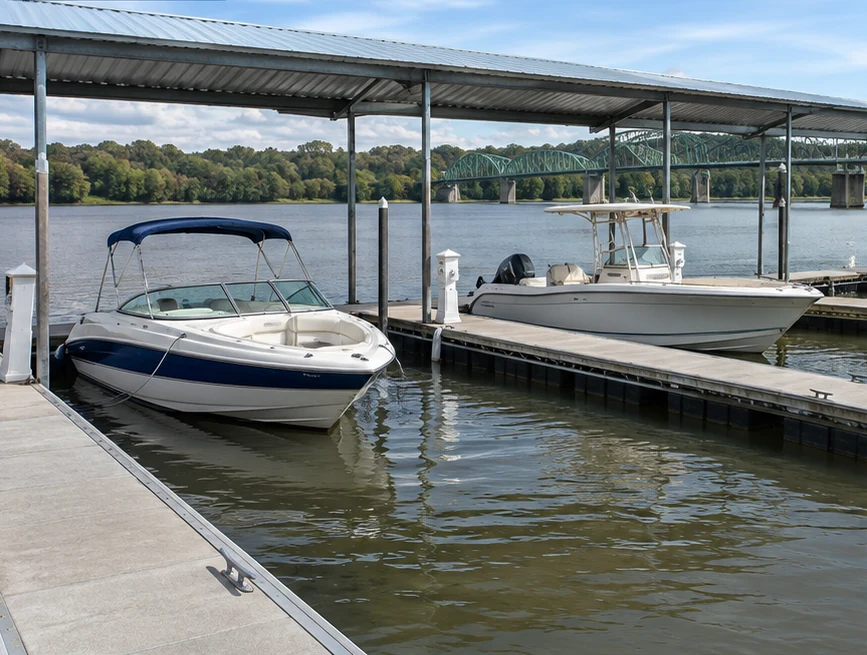
Lorain police received reports on October 13, 2026, that two boats and more than $1,000 in fishing gear had been stolen from a local marina. On October 16, a caller spotted one of the boats on the river. The department’s marine patrol stopped it and recovered it, and three people were taken into custody. The second boat has not been recovered.
In Lorain, three days passed between the theft report and the caller’s sighting, and the second boat is still missing. With Protect Mode on, the boat would have reported its own movement as it pulled away from its slip, setting off the call sequence described above while it was still on the water.
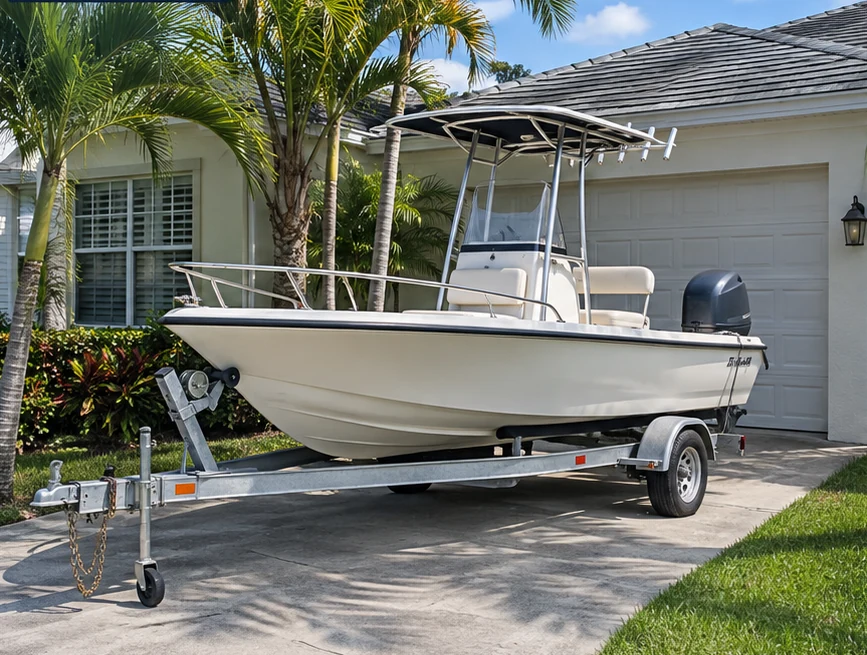
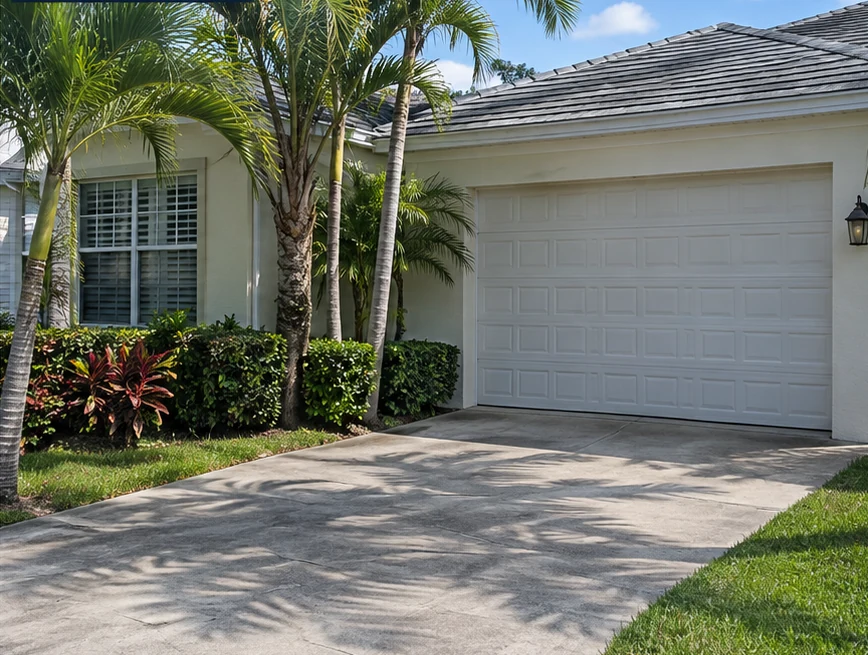
Video showed a pickup taking a boat and trailer from a residential property in St. Augustine at about 10:24 p.m. on October 1, 2026. After the footage spread on social media, the owner’s brother-in-law reported seeing the boat on a nearby highway. An officer found it hitched to a pickup in a parking lot. The trailer’s bent plate came back stolen in law enforcement databases, and the boat’s registration matched. The driver was arrested on October 5.
Because the device is affixed to the boat, Protect Mode works the same on a trailer as at a dock. The trigger would have been the boat leaving its geofence on the night of the theft, not a sighting four days later.
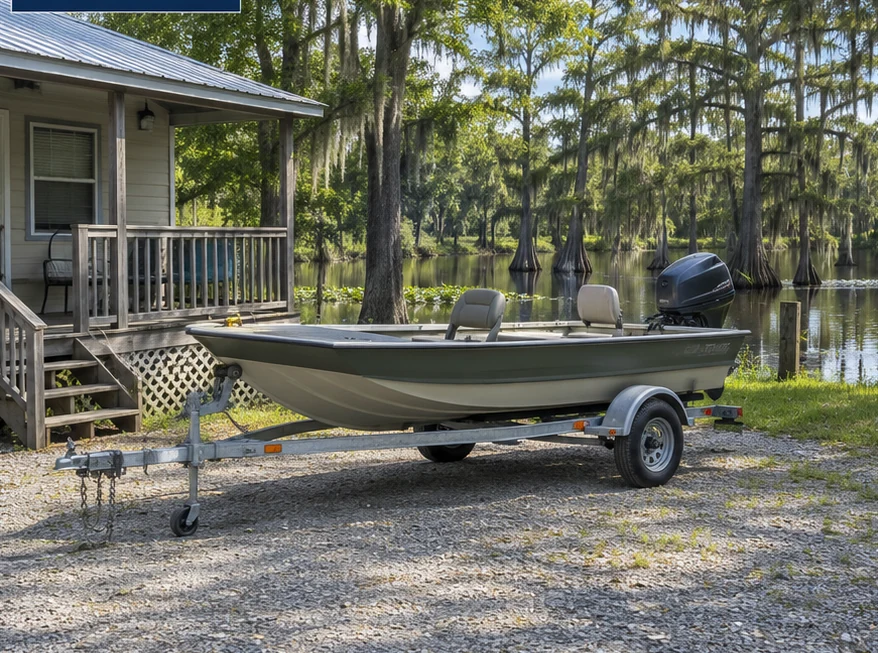
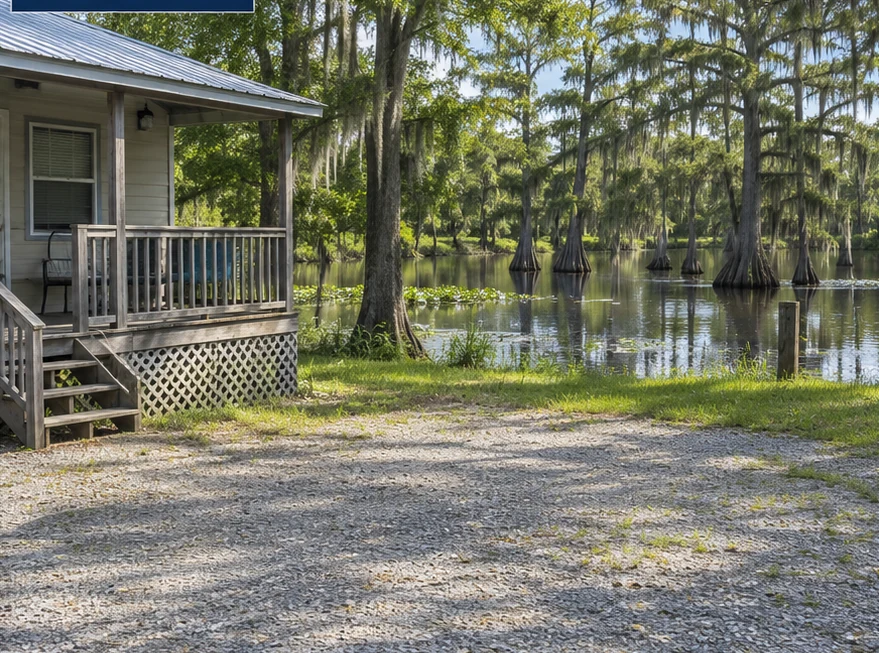
On October 15, 2026, Lafourche Parish detectives began investigating a boat and trailer stolen overnight from a residential street in Larose. License plate recognition cameras identified the truck used in the theft. One motor was found with a suspect at a boat launch, the other was hidden in Lockport, and the boat and trailer were located at a Lockport residence. Two men were arrested.
Earlier in the year, the same sheriff’s office reported a 2021 bass boat and its trailer missing from the side of LA Highway 316 in Bayou Blue. The boat was last seen around 10 a.m. on January 2 and was gone that evening. Detectives asked the public for information; no recovery has been reported.
License plate cameras are a valuable investigative tool, and the Larose arrests show what they can do. But they work after the fact. Someone first has to notice the boat is gone and report it. Investigators then have to work out the time window and the likely route, and the cameras record the tow vehicle, not the boat. In Larose, the boat was taken overnight, and by the time it was found it had been split up: one motor was with a suspect, the other was hidden elsewhere, and the hull and trailer were at a residence. In Bayou Blue, investigators started with a window running from morning to evening, and no recovery has been reported.
A geofence alert works from the other end. The first signal comes from the boat itself as it leaves its protected area, before anyone has to discover the loss, and its live GPS position can be shared with police while the tow vehicle is still on the road, instead of a single plate read at one camera hours later.
The two tools complement each other. An alert establishes when the theft happened and where the boat is heading, and plate readers along that route can help identify who is towing it. Whether an alert would have changed the outcome in either Louisiana case cannot be known from the published reports.
In Clear Lake Shores, Texas, a boat and trailer valued at $253,000 were taken from a marine business in July 2026. Investigators used license plate camera images to identify a truck linked to the theft, and the investigation recovered two boats, three trailers and a side-by-side worth an estimated $300,000 in total.
In Marina del Rey, California, a 30-foot sailboat was stolen from a youth scouting nonprofit in mid-March 2026. Los Angeles County sheriff’s deputies, with help from a community member, recovered it more than three months later.
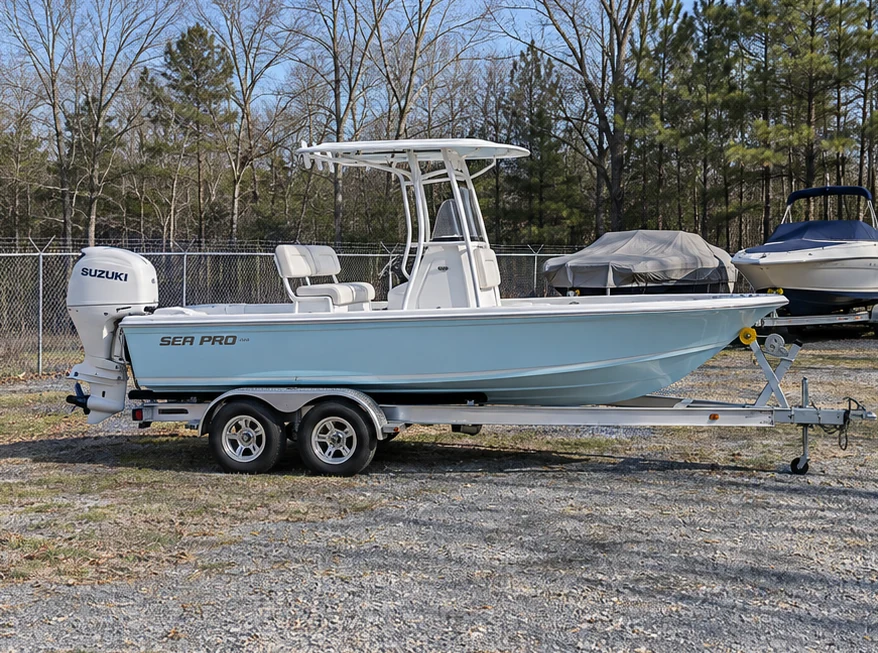
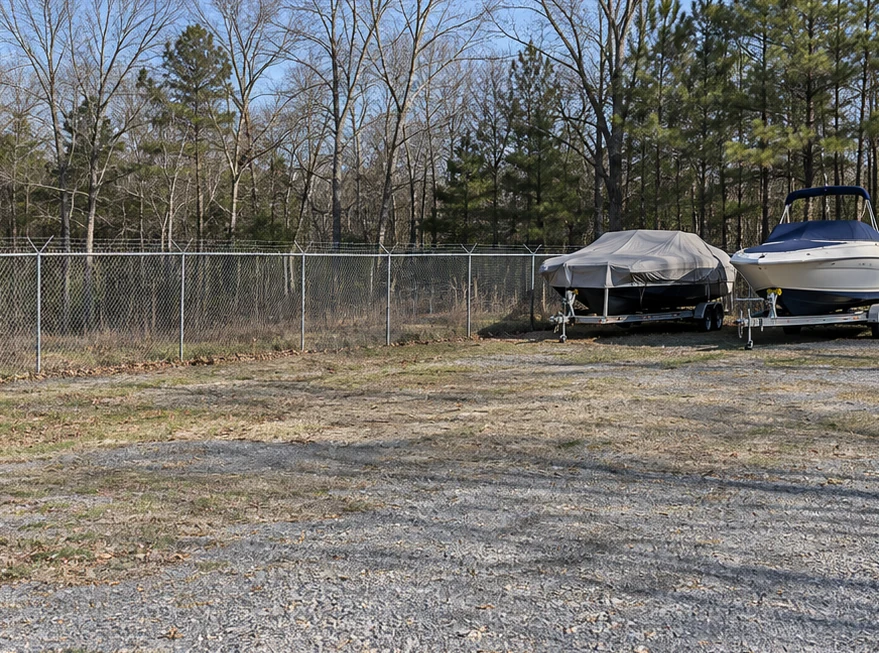
On December 30, 2025, an Oconee County deputy took a report on a 20-foot center-console boat, its outboard motor and a dual-axle trailer stolen from a storage lot. Investigators believe the theft happened sometime after December 7. The package is valued at about $60,000 and has been entered into the National Crime Information Center database.
This is the stored-boat problem. A boat in a storage lot in December is doing exactly what it should be doing: waiting for spring. Its owner isn’t visiting every day, and nobody expects them to. But that leaves a gap, and in this case the theft window ran about three weeks. Investigators could narrow it only to sometime after December 7.
Someone should always be checking. If the owner can’t, that responsibility belongs to someone who can. That is the role of Boat Fix’s 24/7 Command & Control Center. With Protect Mode on, the boat is watched around the clock by a U.S. based team, every day of the year, including nights, weekends, holidays and even while the boat sits in storage.
The Command & Control Center doesn’t take vacation. A geofence breach at 3 a.m. on a holiday gets the same call within seconds as one on a Tuesday afternoon, and a live person answers the 24/7 helpline whenever the owner calls back.
For a stored boat, that changes the question from “When was it taken?” to “Where is it now?” Instead of a three-week window, the owner and police start with a time and a live GPS position.
In nearly every recovery above, the break came from someone recognizing the boat (a caller, a relative, a harbormaster, a community member) or from camera footage reviewed after the theft was reported. Those methods work, but they start late. In Ohio, Louisiana and South Carolina, at least one boat is still missing.
The Boat Fix device is installed on the boat itself, not on the trailer or the tow vehicle. So the geofence follows the boat wherever it sits, and a breach looks the same to the system whether the boat leaves its slip under its own power or rolls out of a driveway behind someone’s truck. Five of the eight thefts in this article involved a boat taken on its trailer.
| Where the boat is | What Protect Mode watches for | Cases in this article |
|---|---|---|
| At a marina slip or dock | The boat motored or sailed away from its berth | New Jersey, Ohio, California |
| On a trailer at home | The boat and trailer hitched up and towed off the property | Florida; Louisiana (Larose) |
| On a trailer by the road or in a storage lot | The boat towed out of a lot or off a roadside, often unnoticed for days or weeks | Louisiana (Bayou Blue); South Carolina |
| At a dealer or marine business | The boat towed off a business lot | Texas |
For trailered boats, the owner switches Protect Mode on whenever the boat is parked, just as they would at the dock. Two limits apply: a trailer stolen without the boat on it is not covered, because the device rides with the boat, and parts removed from the boat, such as an outboard, are not tracked separately.
Protect Mode is an alert and tracking service. It does not physically stop a boat from being moved, and like any connected device it depends on power and a wireless connection to report. Installation and tampering also affect what any tracking system can see.
This article describes how the service is designed to work. Boat Fix was not involved in any of the cases above, and nothing in these reports allows us to say a different outcome was guaranteed. What the cases do show is that boats go missing in every season and every setting, and that someone should always be watching.
Learn more about Protect Mode and the people behind every alert.